What Your Budget Buys in Carmel, Indiana Right Now
July 23, 2026
July 23, 2026
The median sale price in Carmel sat near $630,000 in May and June of 2026, depending on which data provider you trust. That number is accurate, and it is close to useless for a buyer trying to decide between a townhome off Rangeline and a five-bedroom in the Village of WestClay. The median describes a middle that almost no one is actually shopping in. A more honest question is what a given budget buys once you sort for the one feature that quietly reshuffles Carmel prices more than any other.
That feature is not the sub-area. It is the basement.
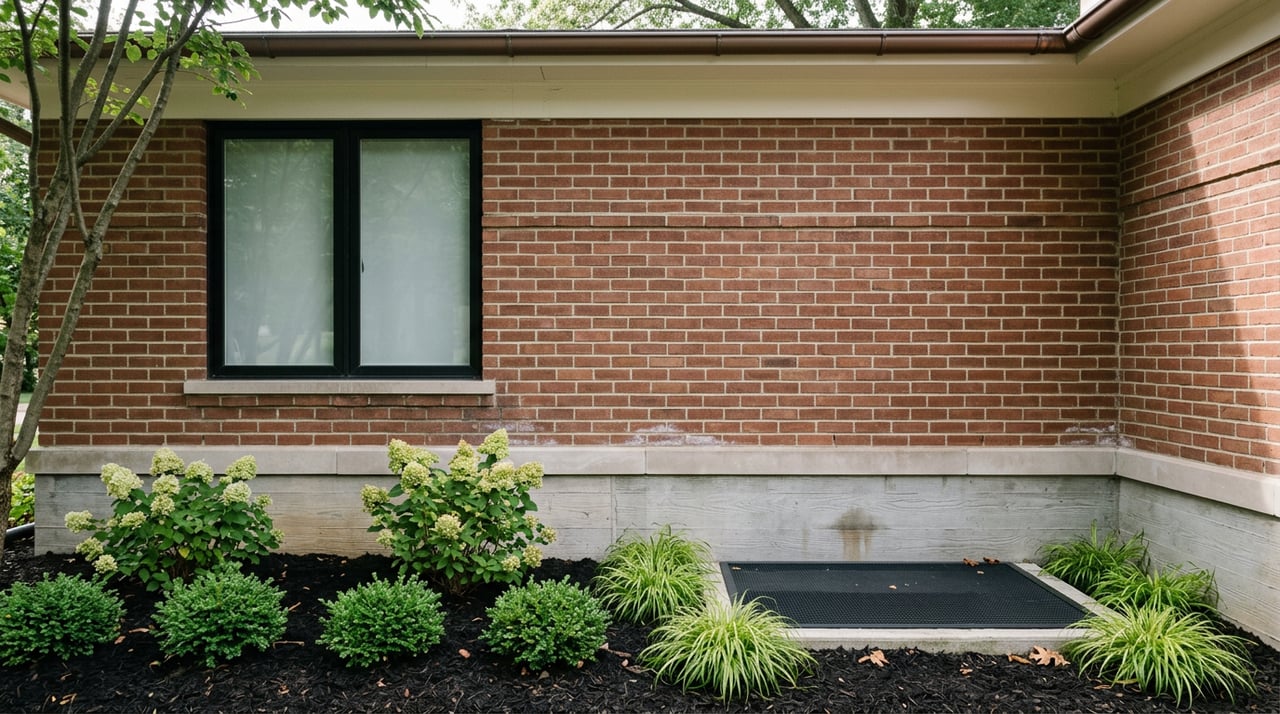
Local MLS data compiled for Q1 2026 puts the average Carmel single-family home with a basement at $731,000 and the average without one at $456,450. The gap is roughly $275,000. Square footage explains some of it, but not all of it. Two homes of similar finish and similar size on similar streets can sit on opposite sides of that line because one has a poured lower level and the other has a slab or a crawl space.
For a buyer working from a portal median, this is the first surprise. The "Carmel price" they have in their head is a weighted blend of two very different products. Once you separate them, the $630,000 median splits into a slab-and-crawl market clustered in the mid-$400s to mid-$500s and a basement market that starts near $600,000 and runs well into seven figures.
This matters at the offer table because a buyer approved for $600,000 who insists on a basement is not shopping in the same Carmel as a buyer approved for $600,000 who is flexible. They are shopping in different halves of the city.
Once you know the split, the sub-areas start to make sense.
Old Town and the Arts and Design District. East Main Street between First and Third Avenue anchors a walkable core with galleries, restaurants like Muldoon's on Main and Danny Boy Beer Works, and easy Monon Greenway access. Housing here skews older, often 1970s and 1980s stock in the surrounding streets, and full basements are common. Even homes that need cosmetic work rarely list under $400,000, and updated homes with basements push the top of what a mid-market budget can reach.
Carmel City Center and Midtown. This is where the slab-and-crawl half of the market concentrates. Townhomes and condos in and around the mixed-use core run from the low $300,000s for condos into the mid-$500,000s for larger attached product. You are trading a lower level for a shorter walk to a concert, a coffee, or a bike ride down the Monon. Buyers who value proximity over storage tend to feel this is the best square-foot value in Carmel.
Village of WestClay. The master-planned community near Main and Towne shows the basement premium most clearly. Redfin pegged the average sale near $630,000 last month with a median close to $532,000 in a recent read, and homes moved in about 21 days. Entry product starts in the mid-$400,000s, custom homes push past $700,000, and the largest lots run higher. Because the neighborhood mixes attached homes, cottage lots, and estate lots on the same streets, two comparable listings can vary by six figures based on lot type and lower-level configuration alone.
Established east-side neighborhoods. Bay Hill, Cherry Tree, and the surrounding streets east of US 31 hold Carmel's most classic suburban stock. Bay Hill runs from the mid-$400,000s into the $900,000s and beyond. Cherry Tree offers traditional single-family homes with larger yards and mature trees. Almost all of these homes have basements. Very few list below $400,000.
West Carmel large-lot streets. West of Towne Road the lots grow, the setbacks lengthen, and the price ceiling lifts. Homes.com data on the West Carmel submarket shows single-family homes in the $800,000 to $1.5 million range and a luxury tier that tops out near $4.7 million, with a median around $607,534. Bridgewater Club near 161st and Carey sits inside this band, with most homes above $600,000.
The pattern is consistent. Where you find basements, you find the higher half of the price distribution. Where you find slab or crawl construction, you find the more affordable half.
In a normal market, a buyer priced out of one product simply widens the search. In Carmel right now the supply picture makes that harder.
Houzeo's April 2026 read showed 245 homes for sale, months of supply at 0.69, a sale-to-list ratio of 98.45%, and 355 closed sales, a 51.71% jump over the same month last year. Zillow's late-May 2026 index had homes going pending in about five days. Movoto's June 2026 snapshot showed a median list price near $629,900 with 22 days on market. The numbers vary by methodology, but they all point the same direction: fewer than one month of standing inventory, and homes clearing the market at close to full price.
When there are three weeks of standing inventory, a buyer with a rigid feature list is not negotiating for a discount. They are negotiating for the right to compete.
The tight supply reinforces the basement line rather than blurring it. Sellers of basement homes do not need to bend, and sellers of slab and crawl homes do not have to either, because their buyers are working from a different budget floor. The two halves of the market almost never bid against each other.
The transaction-level surprises follow directly from the split.
Is the basement premium the same in every Carmel neighborhood? No. It is widest in East Carmel and Bay Hill, where slab and crawl construction is rare and a basement is the default expectation. It is narrower in the City Center core, where a large share of buyers actively prefer attached homes without lower levels. WestClay sits in between and varies by street.
Do days-on-market numbers mean the same thing across sub-areas? Not quite. Zillow shows pending in about five days citywide, while Movoto's June 2026 figure was 22 days and Roots Realty's May 2026 read put median days on market near 27 days. Larger custom homes on the west side and higher-priced basement homes tend to sit longer than the citywide average. Well-priced attached product near the City Center often moves in under a week.
How should a buyer use the two-market view when getting pre-approved? Before you set a budget, decide whether a basement is a requirement or a preference. That single choice narrows Carmel to one of two price maps. Financing conversations get much sharper once the answer is on the table.
If you are weighing sub-areas, lot types, or basement versus slab tradeoffs against a specific budget, Morton Homes Realty can walk you through which half of the Carmel market your dollar actually reaches, and where the current offer conditions leave room to compete.
Stay up to date on the latest real estate trends.
Rooted in trust, expertise, and sincere dedication, we bring a lifelong appreciation of what “home” means to every client and every move.