Same Zionsville Address, Different Tax Bill: What the ZIP Code Doesn't Tell You
August 27, 2026
August 27, 2026
"The legislature adopted changes to the wording that, to me, is purposefully confusing."
That's Zionsville Community Schools Board President Katie Aeschliman, talking about the ballot language voters will see this November on the district's operating referendum. She was frustrated with how the state now requires the tax impact to be worded. But she could have been describing the address itself.
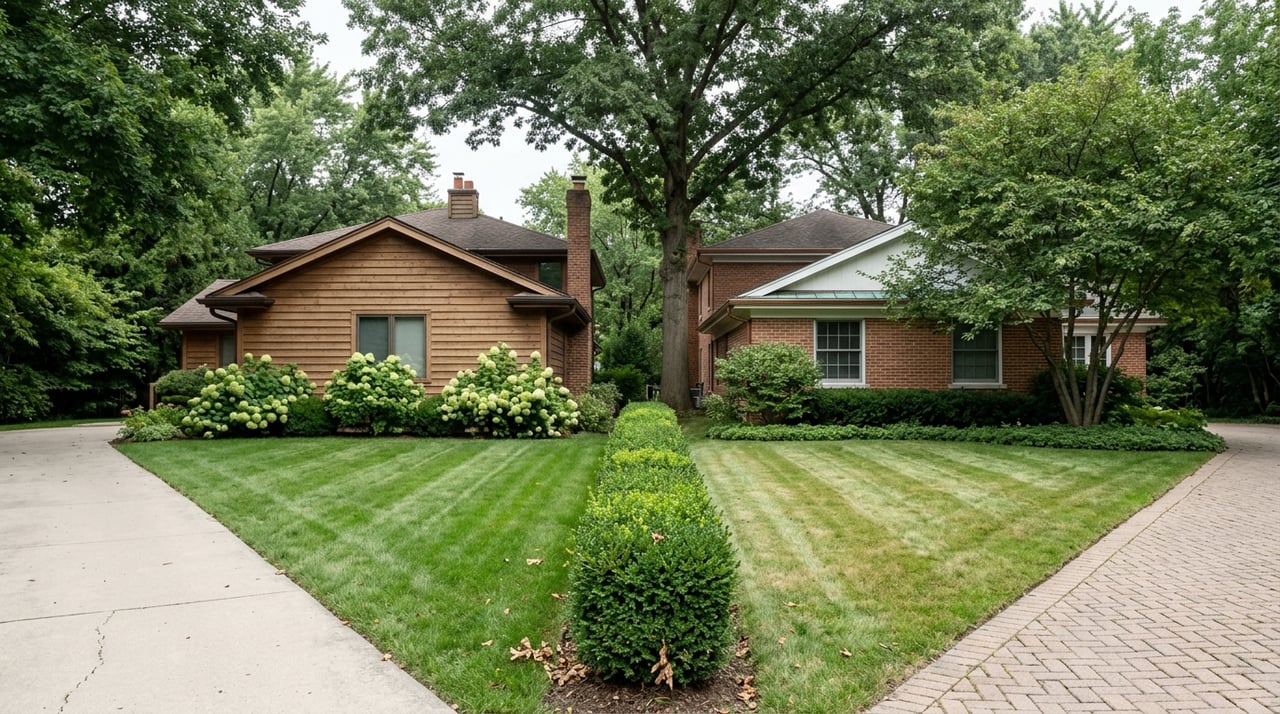
For years, "Zionsville" on a listing has meant something closer to a marketing label than a legal boundary. Two homes can carry the same mailing address, sit a few streets apart, and answer to entirely different school districts and county tax offices. If you're comparing homes by searching "Zionsville" on a portal, you're not comparing one market. You're comparing at least four.
A Zionsville listing touches four separate boundaries, and none of them were drawn to match the others.
None of these four lines is wrong. They just weren't built to agree with each other, and a listing description has no obligation to tell you which combination you're actually getting.
This isn't a clerical error. It's the predictable result of two different processes moving at two different speeds.
The Town of Zionsville has annexed aggressively to keep pace with growth. In 2010 it annexed 39.5 square miles across Eagle and Union townships, pushing the town's area to 49.7 square miles and adding more than 9,000 residents. In 2014 it added another 3.9 square miles from Perry Township, bringing the total to 53.63 square miles. A town council can vote to extend its own boundary in a matter of months.
School district lines can't move that fast, because they aren't the town's to move. Indiana law puts school corporation boundaries under the state legislature, not local government, and Zionsville Community Schools has been explicit that it has no jurisdiction over zoning or annexation decisions even as those decisions send more students its way. Whitestown, immediately north, illustrates the same mismatch: the majority of Whitestown residents attend Lebanon Community Schools, while the Eagle Township portion of Whitestown falls inside the Zionsville Community Schools boundary. Same town government, two different school corporations, and no mechanism to line them up.
The result is a patchwork that keeps widening every time either boundary grows, and the two boundaries almost never grow together.
The tax side of the split is just as real, and it's the part most buyers never see until closing. Boone County's certified 2026 rates vary by taxing district within Zionsville itself, before you even get to the pockets billed by other counties.
| District | 2026 Rate per $100 Assessed Value | ZCS Referendum Add-On |
|---|---|---|
| Boone County rural town district | $1.8531 | Only if ZCS-assigned |
| Boone County town district | $2.0336 | Only if ZCS-assigned |
| Whitestown side | $2.8894 | Only if ZCS-assigned |
| Carmel, Clay Township (for comparison) | $2.0167 | N/A |
| Westfield, Washington Township (for comparison) | $2.3448 | N/A |
Every ZCS-assigned home, regardless of which of those base rates applies, also carries the district's cap-exempt referendum rate of $0.3433 per $100 assessed value. A home assigned to Lebanon Community Schools or MSD Pike Township never sees that line item, no matter what its mailing address says. Run the math on a $600,000 assessed home and that referendum rate alone is roughly $2,050 a year, a cost that exists purely because of which school boundary the parcel happens to fall inside, not because of the town rate, the ZIP code, or the price of the house next door.
This is the piece that portal medians can't show you. Two homes priced identically and taxed at nearly the same municipal rate can still differ by thousands of dollars a year in total tax exposure, entirely because of a school boundary that has nothing to do with either home's condition or value.
That gap is about to matter more. The ZCS Board of Trustees approved a ballot question on June 8, 2026, putting an eight-year operating referendum in front of voters this November, with a maximum annual levy of $21.4 million. The district's current referendum, in place since 2012, funds roughly one in three ZCS teaching positions and expires in December 2027. Because a recent change in state law now restricts referendum questions to general election ballots in even-numbered years, the district couldn't wait until 2028 without risking a funding gap, which is why the vote is happening now rather than closer to the actual expiration date.
State-mandated ballot language requires the tax impact to be calculated as though no referendum currently existed, even though ZCS has had one continuously since 2012. Using that method, the ballot will show a median $600,000 home's annual bill rising by $1,368 if voters approve the measure, a bigger jump on paper than most current ZCS homeowners will actually feel once existing deductions are factored in.
None of that applies if your Zionsville-addressed home happens to sit in Lebanon Community Schools, Carmel Clay Schools, or MSD Pike Township. The referendum outcome, whichever way it goes, only touches parcels inside the ZCS boundary. A buyer comparing two similarly priced "Zionsville" homes this fall could be comparing one where the tax bill is about to shift and one where it categorically cannot, based entirely on a boundary the listing photos will never mention.
A few minutes of parcel-level checking resolves all of this before it becomes a surprise at closing.
None of this requires guesswork. It requires pulling the parcel record instead of trusting the sign in the yard.
Does buying inside the Town of Zionsville guarantee I'm in Zionsville Community Schools? No. Town limits and school boundaries are set by different authorities and don't align at every edge, as the Whitestown example shows.
If my Zionsville-addressed home is zoned for Lebanon or Pike Township schools, does the November referendum affect my tax bill? No. The referendum rate only applies to parcels assigned to Zionsville Community Schools.
What happens to the seller's homestead deduction when I close? You inherit it for one billing cycle. To apply it going forward as your own, the sales disclosure form filed at closing with the homestead box checked typically serves as your application, and the legal cutoff is January 15 of the year your first bill comes due. If that step gets missed, Form HC10 filed with the Boone County Auditor by that same date covers you.
A Zionsville address tells you almost nothing about which of these four boundaries you're actually buying into. The price on the listing is the easy number. The tax district and school assignment are the ones that take a phone call and a parcel lookup, and they're the ones that actually determine what you'll pay next year and the year after that.
If you're comparing homes across Zionsville's edges and want someone to run those numbers down to the parcel before you write an offer, Morton Homes Realty can walk through exactly what a specific address carries, tax district, school assignment, and all. Contact us before you fall in love with a boundary line you haven't checked yet.
Stay up to date on the latest real estate trends.
Rooted in trust, expertise, and sincere dedication, we bring a lifelong appreciation of what “home” means to every client and every move.