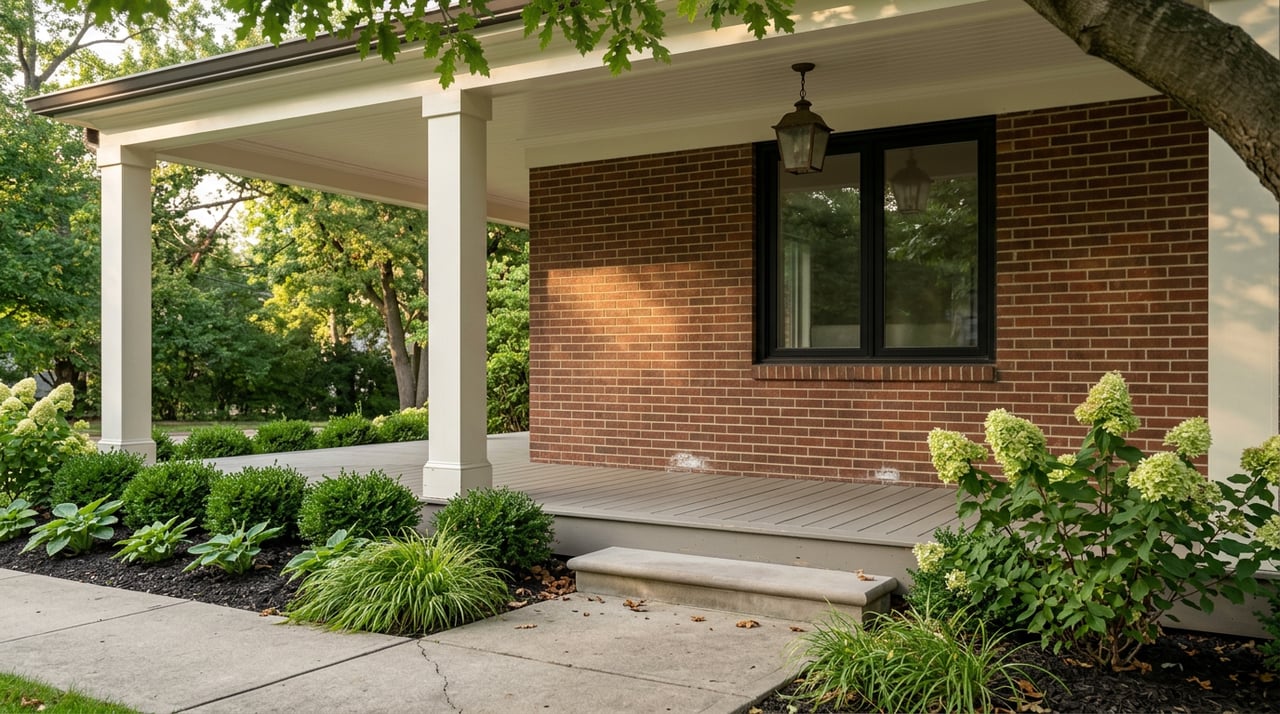
What Westfield's New Construction Pipeline Is Doing to Resale Prices
August 6, 2026
August 6, 2026
The headline number for Westfield looks reassuring. Redfin's March 2026 read put the median sale price near $497,000, up 9.3 percent year over year, with homes closing at 99 percent of list and a 38-day median days on market. If you are a resale seller in Wood Wind or Springmill Ponds, that reads like a green light.
Then a Lennar rep three blocks away offers a buyer a permanent rate buydown into the fives. Your comps did not price that in.
This is the piece of the Westfield market that the portal medians hide. The city has one of the largest active new-construction pipelines in the metro, and the mechanism builders use to move that inventory does not show up in a per-square-foot chart. It shows up in the offer your buyer never writes.
As of mid-June 2026, the Indianapolis MLS was tracking 119 active new-construction listings inside Westfield at a $530,000 median list price and an 81-day average days on market. Compare that to the resale picture: a Redfin median around $489,000 to $497,000 in the first quarter, moving in about 38 days.
Two numbers stand out when you set them side by side.
First, new-construction inventory is deep. The typical resale seller has an inventory of one. The builders in Westfield, collectively, are sitting on more than a hundred finished or near-finished homes at any given moment, and they are motivated in a way an individual seller almost never is. When a Pulte community closes a quarter with unsold spec homes, someone in Atlanta looks at the report and authorizes another round of incentives.
Second, the new-build DOM at 81 days is roughly double the resale DOM. That gap is not a signal that new construction is unwanted. It is a signal that builders are willing to carry inventory longer to protect base price, using rate buydowns and closing credits instead of price cuts. A resale seller who prices against the headline median without watching the incentive layer is bringing a knife to a payment fight.
The mechanic is worth spelling out because it is the whole thesis.
A builder can advertise a home at $549,000 and, at the closing table, cover a permanent buydown that gets the buyer into the low fives on a 30-year fixed. On a $520,000 loan, moving from a 6.75 percent market rate to 5.25 percent is roughly $500 a month, every month, for the life of the loan. Movement Mortgage's June 2026 explainer of how builders structure these credits notes that permanent buydowns "run meaningfully below current market levels on select homes." That is not a marketing gloss. That is a real payment.
Now put yourself in the buyer's shoes. Two houses. One is a 2004 resale on a mature lot at $485,000 with a market rate mortgage. One is a 2026 spec home at $549,000 with a builder-paid rate at 5.25 percent and a $10,000 closing credit. The resale looks cheaper on the sticker. The new build is cheaper by roughly $300 to $400 a month once the buydown is applied.
Buyers shop payments. This is the number the median cannot show you.
The supply behind this dynamic is not incidental. It is the city's growth plan.
| Project | What it is | Why it matters for resale |
|---|---|---|
| Kimblewick by Del Webb | Active-adult 55+ community by Pulte | Pulls downsizer demand out of resale ranch inventory |
| Chatham Hills | Golf and club community by Drees | Sets the ceiling comp for high-end resale near 32 |
| Lindley Ridge | Premium new construction | Similar drag on move-up resale in the $700K–$1M band |
| Towns at Union | Infill townhomes near Grand Junction Plaza | Competes with resale condo and townhome supply downtown |
| Ironstone at Hortonville | Proposed ~1,800-home annexation | Signals another decade of new supply if approved |
Mayor Scott Willis told Fox 59 in the fall of 2025 that the Ironstone plan would take up to 15 years to build out and expects a city council vote by spring 2026. He also confirmed a groundbreaking on a new fire station inside the development footprint, which is the kind of detail that tells you the city treats the pipeline as real.
The takeaway for a resale seller is not that Westfield is oversupplied. It is that the supply is diverse. There is a builder product competing with almost every resale product tier in the city, from the 55-plus rancher to the club-community estate to the walkable downtown townhome. Whatever you are selling, someone with a design center and a rate sheet is selling something adjacent.
There is a second-order problem hiding here, and it is the one that catches resale buyers off guard on new builds and drags on nearby resale comps.
When a builder closes a customized home with $60,000 in options and a lot premium, the contract price gets recorded. The appraiser sees it. But the incentive package — the $15,000 in rate buydown cost, the $8,000 in closing credits — often does not net out of that recorded price the way a straight price reduction would. The comp looks stronger on paper than the actual cash-to-seller was.
For the next resale seller down the street, that is a friendly comp. For the next new-construction buyer, whose own appraisal will lean on that same recorded number, it can help hold value. For the buyer paying cash without financing incentives, it is a warning to underwrite the sale price and the incentive package as one blended number, not two.
This is where a broker who reads the whole closing packet, not just the MLS field, earns their keep. Ask what the recorded price included. Ask whether the builder covered lender-side costs that inflated the sticker. Ask which nearby builder closings the appraiser is likely to pull.
A few practical adjustments the current market is asking of sellers.
Should I wait for builder incentives to ease before I sell? The incentive layer has been persistent since 2023 and Westfield's pipeline suggests more supply, not less, over the next decade. Timing a sale against a pullback in incentives is a bet with no obvious payoff date.
Are builder rate buydowns available on resale homes too? A seller can offer a rate buydown as a concession, and in this market it is often a stronger tool than a straight price cut of the same dollar amount. The buyer feels it every month instead of once. Your lender partner can size a 2-1 buydown against a price reduction and show you which one nets better for a typical buyer profile.
Does the new-construction premium mean resale is a better deal? Realtor.com's early-2025 analysis pegged the national new-home premium near 13.5 percent, but that number is a sticker-price comparison. Once you fold in the builder's rate contribution, warranty, and lower near-term maintenance, the effective premium in Westfield is often much smaller than the headline. Underwrite both on total monthly cost and five-year outlay, not on price per square foot.
What about the downtown projects — do they help or hurt resale? The Grand on Main, the Park and Poplar redevelopment, and the Park Street streetscape are demand drivers for the downtown ring. They pull buyers who want walkability, which tightens resale inventory in the older streets around Grand Junction Plaza and helps sellers there. The pressure sits on the outer subdivisions where new construction has room to sprawl.
The Westfield market is not slow and it is not soft. It is competitive in a way the portal medians will not tell you, because the competition is running a play the portals do not measure. A resale seller who understands the builder next door has already priced correctly. One who does not has just given the buyer a reason to walk across the street.
If you are getting ready to sell in Westfield, or buying against a builder and trying to read the incentive package honestly, Morton Homes Realty can pull the specific comps and incentive intel your subdivision is actually competing with. Contact Us to start a real pricing conversation.
Stay up to date on the latest real estate trends.
Rooted in trust, expertise, and sincere dedication, we bring a lifelong appreciation of what “home” means to every client and every move.