In Zionsville's Village, the Oldest House on the Block May Have the Least Freedom to Change
September 10, 2026
September 10, 2026
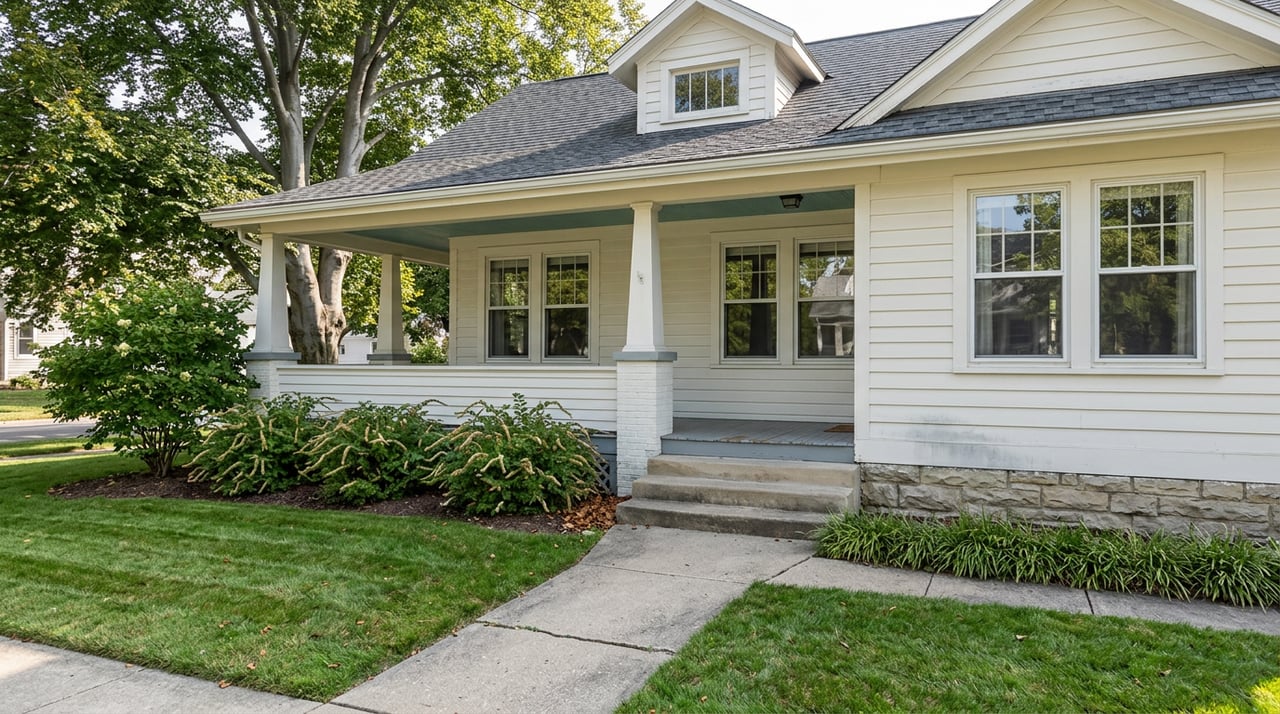
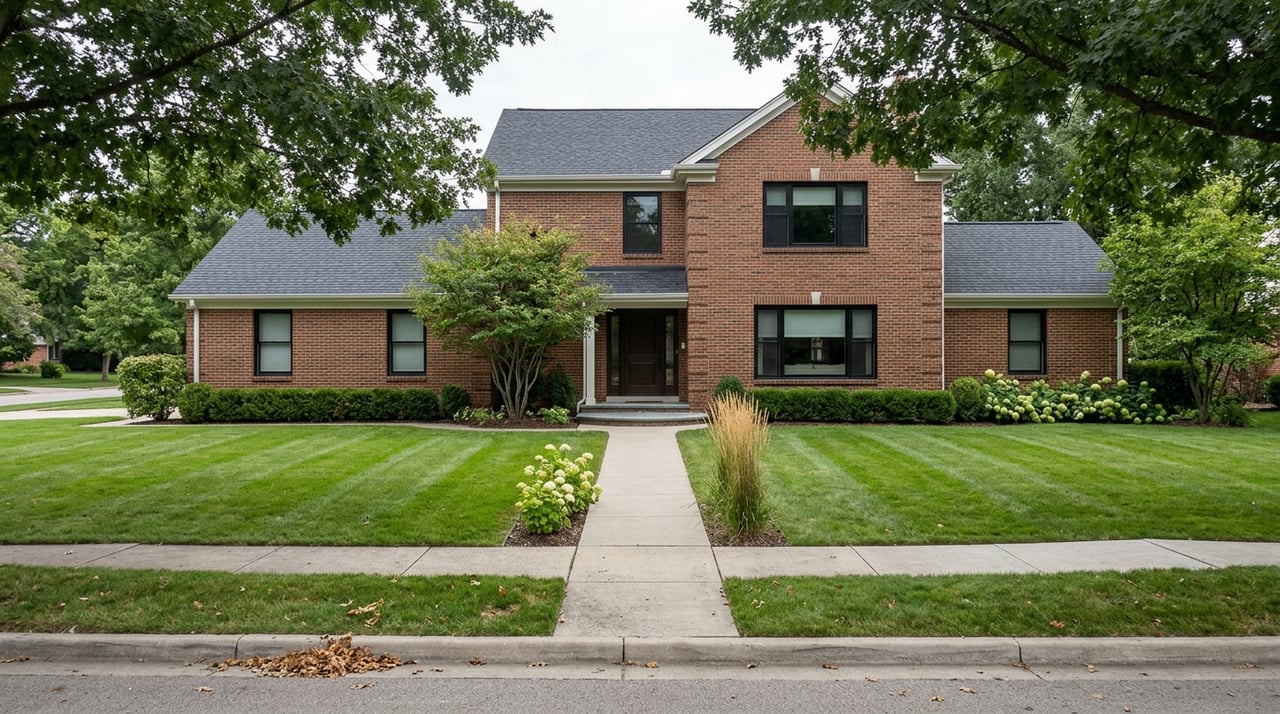
Two houses sit across the street from each other in Zionsville's Village core. One still has its original wraparound porch, its narrow-cut siding, its 1905 bones untouched by a single addition. The other looked much the same forty years ago, but a 1990s remodel squared off the roofline and added a two-story great room out back. To anyone walking Main Street with a coffee from one of the shops off the brick, they read as equally "old Zionsville."
They are not equally free to change again. And the town has already decided which is which, on paper, years before either owner ever lists.
In 2021, the SullivanMunce Cultural Center funded a field survey of Zionsville's historic village boundaries, the first update since a 1983 baseline. Surveyors walked the streets that summer and rated every building against a simple test: was it built in or before 1962, and does it still retain its basic form and shape, regardless of newer materials layered on top. Pass that test and a house is classified "contributing." Fail it, whether because it was built later or because a past remodel changed its shape, and it is "non-contributing."
Across the surveyed area, which the document describes as extending west into a pocket bounded by Oak, 9th, and Laurel Streets, roughly 70 percent of buildings came back contributing and 30 percent non-contributing. The survey names specific examples: a Four Square at 495 W. Poplar Street dated to around 1905, a Prairie-influenced Four Square at 930 W. Pine Street from the same era, a Craftsman-style house at 110 S. 2nd Street from 1921, and a Colonial Revival cottage at 515 W. Cedar Street built around 1939. These are not hypothetical categories. They are ratings already sitting on file for real addresses.
Here is the part that surprises most buyers: contributing status is not a badge of freedom. It is the opposite.
The Town of Zionsville built the legal machinery to act on these ratings in 2022, when the Town Council passed Ordinance 2022-06 establishing a Historic Preservation Commission. The ordinance itself is careful to say that creating the commission does not automatically create a historic district. It only authorizes the commission to survey properties and recommend district boundaries to the Council, which may or may not approve them.
If a district is ever approved, the ordinance sets it up in two phases. Read plainly, the first phase only requires town review, called a Certificate of Appropriateness, for demolishing a building, moving a building, or new construction visible from the street. Ordinary maintenance and interior work stay untouched. The second phase is where it changes: once a district moves into full "Historic District" status, a Certificate of Appropriateness would be required before a permit is issued for almost any conspicuous exterior change, including something as routine as a paint color.
That second phase does not happen automatically either. The ordinance gives property owners inside a proposed district the power to block it: if a majority of owners object in writing, the district stays in the lighter first phase indefinitely.
So the house rated "contributing" is the one a future commission would scrutinize most closely if a district is ever finalized. The house rated "non-contributing," even if it looks just as charming from the sidewalk, would face a lower bar for the same renovation.
| Status | What earns it | Practical effect if a district is finalized |
|---|---|---|
| Contributing | Built 1962 or earlier, retains original form and shape | Higher scrutiny under Certificate of Appropriateness review, especially for exterior alterations and color |
| Notable / Outstanding | Contributing, plus strong integrity of historic materials | Same review, with less flexibility on materials and detailing |
| Non-contributing | Built after 1962, or altered enough to lose original form | Lower scrutiny, more latitude for future exterior changes |
It would be easy to write this as a warning that a Village-core buyer is walking into red tape. That is not quite accurate as of today.
The ordinance's first reading passed the Zionsville Town Council 5 to 2 in April 2022, with then-Council President Jason Plunkett and council member Craig Melton opposed. Local reporting on the meeting noted that part of the resistance came from residents uneasy about the idea of their expensive homes being labeled "non-contributing," a term that sounds like a demotion even though, functionally, it carries fewer restrictions. The town's own preservation committee has stated plainly that the ordinance does not impact existing structures under its first phase, only new construction, demolition, and moving a building.
Then, in 2023, the town moved into a much larger project: rewriting its entire zoning code from 38 districts down to 15 using form-based code, a process that consumed public attention through much of that year. Whether a formal historic district map for the Village core has since been submitted to the Council and adopted is not something the public record makes clear as of this writing. What is clear is that the survey has been done, the commission exists, the two-phase mechanism is written into law, and a simple majority-objection threshold is already the rule that would keep any newly proposed district in its lighter first phase.
That is a strange place for a market to sit. The classification work is finished. The political decision to act on it is not. A buyer today is not walking into an active restriction. They are walking into a file that could become one.
Does this affect my property taxes? No. The contributing and non-contributing ratings come from a cultural preservation survey, not from the Boone County Assessor, and nothing in the ordinance ties the classification to assessed value.
Can I still paint my house today? Yes. There is no public record confirming that a specific historic district map has been formally adopted for any part of the Village core, so nothing currently requires a Certificate of Appropriateness for routine work. Even if a district is established, its lighter first phase only covers demolition, moving a building, or new construction visible from the street. Color changes would only require review if a district later advances to full historic status.
What if my street was never surveyed? The 2021 survey covered a specific historic core. Homes outside that boundary, including much of Zionsville's newer construction, are not part of this classification system at all.
Can a homeowner change a rating? The survey reflects a building's condition and form as observed in 2021. A significant remodel since then could plausibly change how a future review would treat a property, though there is no public process for individually appealing a rating outside of a formal district designation process.
If you are weighing an older home in Zionsville's Village core, the question is not whether it has character. It clearly does. The question is what that character means for the next owner's plans, and that answer is already sitting in a survey document most buyers never think to ask about.
At Morton Homes Realty, we walk Village-core buyers and sellers through exactly this kind of detail before it becomes a surprise at closing or a headache mid-renovation. If you are considering a purchase, sale, or addition to an older Zionsville home, contact us and we will help you understand what you are actually buying.
Stay up to date on the latest real estate trends.
Rooted in trust, expertise, and sincere dedication, we bring a lifelong appreciation of what “home” means to every client and every move.